Displaying 1 - 10 of 13
Supporting the Implementation of the Global Framework for Through-life Conventional Ammunition Management in the Asia-Pacific
This briefing paper provides an overview of the Global Framework for Through-life Conventional Ammunition Management (GFA) and explores its relevance and implications for the Asia-Pacific region. Building upon discussions held during the Informal Regional Meeting in support of the GFA—organized by UNRCPD on 4–5 December 2024 in Kathmandu, Nepal—and based on desk research and a series of consultations, the paper identifies regional opportunities and challenges for GFA implementation. The paper begins with a brief history of the process leading to the elaboration and adoption of the GFA. It then outlines the 15 objectives with reference to the rationale provided in the Annex of the Framework. The paper also examines synergies with other international and regional arms control instruments. Finally, it presents key considerations for Asia-Pacific states, highlighting specific regional issues, and offers recommendations to support effective and sustainable implementation of the GFA in the …
Jun 16, 2025
Background paper: The Global Framework for Through-life Conventional Ammunition Management and its Application in Latin America and the Caribbean
This working paper provides an overview of the Global Framework. After setting out a brief history of the process of its elaboration and adoption, the main objectives of the Global Framework are discussed. The 15 objectives are briefly summarised with reference to the rationale for each objective as set out in the Annex of the Global Framework. Synergies with other international and regional arms control instruments are examined. The paper then looks at some of the main opportunities and potential challenges for countries in the Latin American and Caribbean region and provides recommendations to support the implementation of the Global Framework in this …
May 21, 2024
Global Framework for Through-life Conventional Ammunition Management
In 2023, United Nations Member States adopted a new international instrument containing political commitments to prevent diversion, illicit trafficking, and misuse of ammunition; mitigate and prevent unplanned explosions at munition sites; ensure the safety and security of conventional ammunition throughout its life-cycle from the point of manufacture; and contribute to lasting peace, security and sustainable development. The Global Framework covers all types of ammunition: from small-calibre to the largest conventional ammunition. It contains 15 objectives and 85 concrete measures to promote the safety, security and sustainability of through-life conventional ammunition …
May 21, 2024
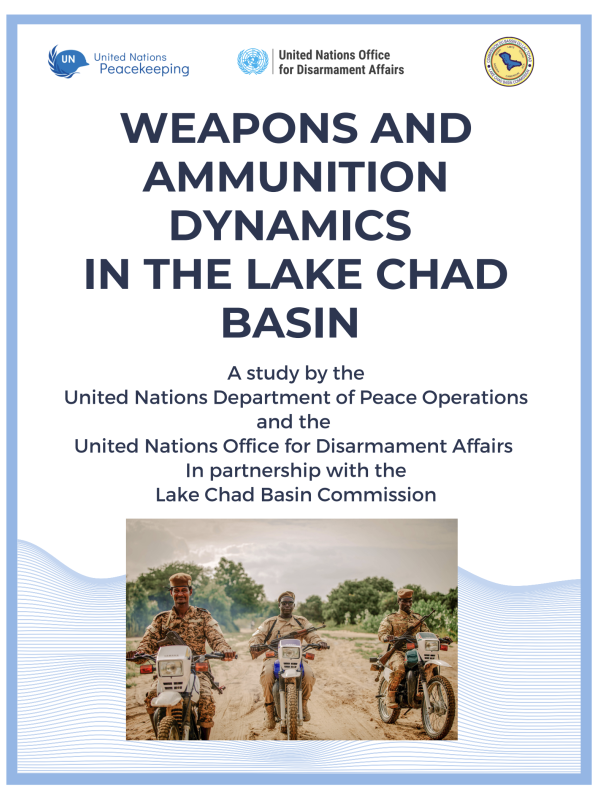
Weapons and Ammunition Dynamics in the Lake Chad Basin
The study was developed by the Department of Peace Operations (DPO) and the Office for Disarmament Affairs (ODA) in partnership with the Lake Chad Basin Commission (LCBC), and was made possible through the generous contribution of the Government of Germany. The Lake Chad Basin region has been affected by illicit arms flows representing one of the primary conflict drivers. As part of an integrated DDR process, the implementation of transitional weapons and ammunition management (TWAM) can serve to reduce the capacity of individuals and groups to engage in armed violence and conflict. To this end, the study presents key findings as well as recommendations to support national, regional and international arms control and DDR policymakers and practitioners in the design and implementation of evidence-based, efficient and gender-sensitive WAM and DDR initiatives in line with good practices. The report analyzes (i) political and security aspects, (ii) current weapons and ammunition dynamics, …
Oct 31, 2022
Gender-sensitive Ammunition Management Processes: Considerations for National Authorities
While gender analysis has been introduced to address a variety of aspects of small arms control, it has received less attention in the ammunition-specific domain, especially outside of stockpile management concerns. To address the issues of unplanned explosions and diversion of conventional ammunition, there is not only a need to strengthen ammunition management policies and practices throughout its life cycle but also to ensure they are gender-sensitive. Following the release of a briefing paper last year, UNODA and the Small Arms Survey developed the report Gender-sensitive Ammunition Management Processes: Considerations for National Authorities, providing reflections on the mainstreaming of gender throughout the life-cycle management of ammunition. The report highlights practical suggestions for applying gender analysis to ammunition management, consistent with the Final Report of Group of Governmental Experts (GGE) on problems arising from the accumulation of conventional …
Oct 30, 2021
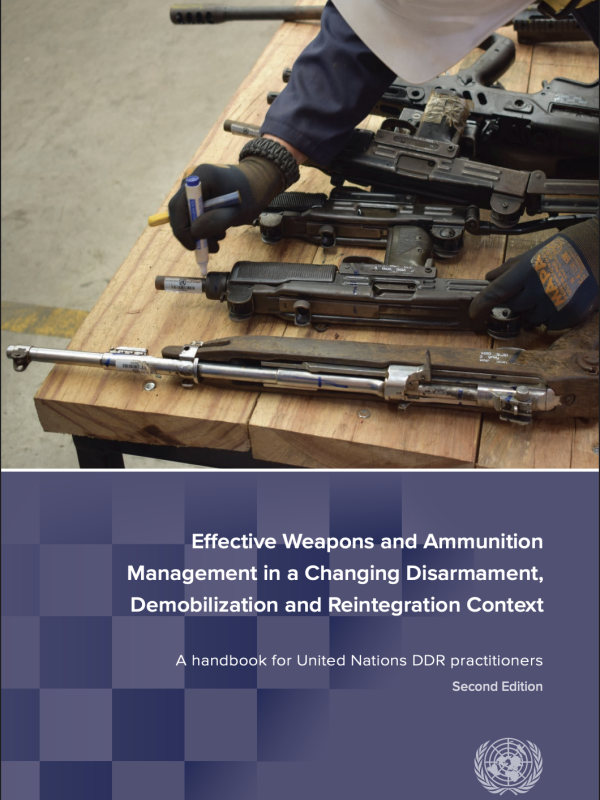
Effective Weapons and Ammunition Management in a Changing Disarmament, Demobilization and Reintegration Context
A Handbook for United Nations DDR practitioners
First published in 2018, and developed as part of a joint initiative between the Department of Peace Operations and the Office for Disarmament Affairs, the Handbook provides DDR practitioners with practical guidance to design and implement state-of-the-art disarmament and weapons and ammunition management initiatives as part of integrated DDR processes, including through the use of DDR-related tools such as Community Violence Reduction. The Handbook draws upon good practices and innovative approaches developed in the field, as well as relevant international standards and guidelines. This second edition reflects relevant developments at the policy level, including the launch of the revised Integrated DDR Standards and the new MOSAIC module on SALW control in the context of DDR, and ensures consistent gender mainstreaming as well as systematic integration of youth …
Apr 30, 2021
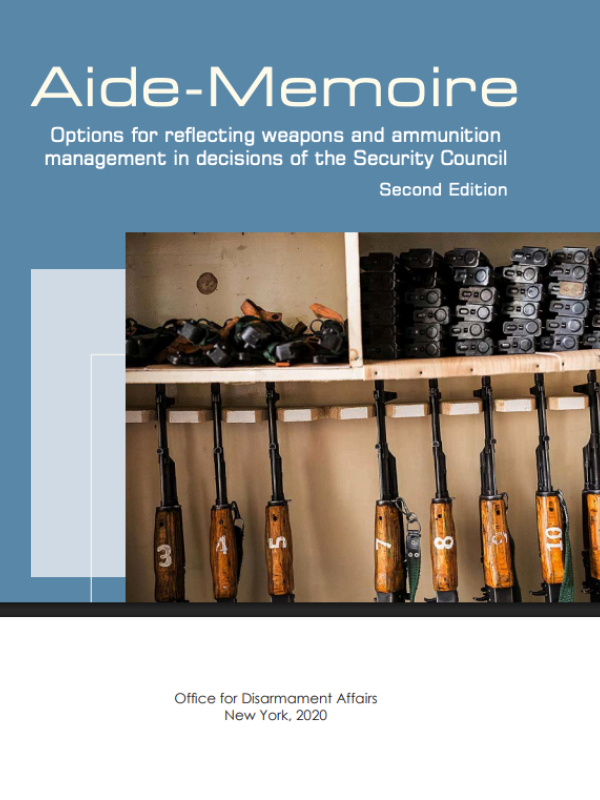
Aide-Memoire: Options for reflecting weapons and ammunition management in decisions of the Security Council
This is the Second Edition of the Aide-Memoire that was originally published in 2018. The content has been updated to reflect the evolution in the Security Council’s practice in addressing weapons and ammunition-related issues from the end of the 1990s through to August 2020. This Second Edition includes a new section highlighting recommendations made by the Secretary-General to support the mainstreaming of weapons and ammunition-related matters in the work of the Security Council derived from previous reports to the Security Council on small arms and light weapons. The main body of the Aide-Memoire (and its supporting Annex 1) is based on a review of more than 650 UN Security Council country-/region-specific and thematic resolutions, and relevant presidential statements issued since the end of the 1990s. A 30-year time frame was used to ensure a broad pool of language options. This time period also corresponds to the establishment of several of the main United Nations peace …
Oct 30, 2020
Making Room for Improvement: Gender Dimensions of the Life-cycle Management of Ammunition
In recent years, the international arms control agenda has become more aligned with that of sustainable development and the Women, Peace, and Security Agenda. As a result, two important synergies have emerged. The first is a focus on disaggregating, assessing, and addressing the various ways in which arms and ammunition impact different stakeholder groups through tools such as gender analysis and the sex disaggregation of data. The second is the need to gender mainstream relevant policies and procedures––that is, to institutionalize meaningful participation in all work processes and structures. The rationale for these approaches is that they will lead to control efforts that are more equitable for those who do the work and more effective and sustainable for beneficiaries. The UN Secretary-General first drew attention to the importance of these considerations in his Securing our Common Future: An Agenda for Disarmament in 2018, and subsequently in his 2019 Report on Small Arms and …
Oct 30, 2020
Conventional Ammunition Management: Developments and Challenges from COVID-19
The COVID-19 pandemic is an unprecedented global challenge with as yet unknown social, economic and political consequences, both short- and long-term. This includes a potential impact on the field of disarmament in general and the conventional ammunition management in particular. This paper offers a preliminary analysis of the effects of COVID-19 on the ammunition management sector in the spring of 2020. It raises key issues related to the risks associated with conventional ammunition through the implementation of relevant control and management measures. The paper argues that shifts in national priorities and reduced resources may affect overall international disarmament efforts by undermining the management of conventional ammunition, and potentially enhance the risks of accidental explosions and diversion. Ammunition management needs to remain a priority during and after COVID-19. Implementing effective and sustainable ammunition management policies and practices will allow states …
Aug 26, 2020
A Guide to Developing National Standards for Ammunition Management
This guide is published by the UN SaferGuard Programme as a practical support guide for applying the International Ammunition Technical Guidelines (IATG). It aims to assist State authorities in the development of national standards for ammunition management based on IATG and towards implementing those standards across State institutions. More specifically, it outlines the key considerations and processes involved in the development of national standards and provides advice for the development of an organizational framework necessary for an effective, coordinated and sustainable national ammunition management …
Mar 30, 2019