In 2023, United Nations Member States adopted a new international instrument containing political commitments to prevent diversion, illicit trafficking, and misuse of ammunition; mitigate and prevent unplanned explosions at munition sites; ensure the safety and security of conventional ammunition throughout its life-cycle from the point of manufacture; and contribute to lasting peace, security and sustainable development. The Global Framework covers all types of ammunition: from small-calibre to the largest conventional ammunition. It contains 15 objectives and 85 concrete measures to promote the safety, security and sustainability of through-life conventional ammunition management.
Dear Colleagues,
We are very pleased to share the eleventh issue of the UNSGM newsletter, which covers the activities organized in support of the UNSGM for the second half of 2025. The UNSGM team at UNODA worked diligently to maintain the pace of activities in 2025. We are pleased to provide more details on these activities below, as well as an update on staffing for the UNSGM team to ensure the continued high standard of support going forward.
Dear Colleagues,
We are very pleased to share the tenth issue of the UNSGM newsletter. 2025 has proven to be another busy year for the UNSGM team. The first half of the year has already seen several training courses, a regional outreach workshop, and many other activities to strengthen the UNSGM – more details on which can be found in this issue.
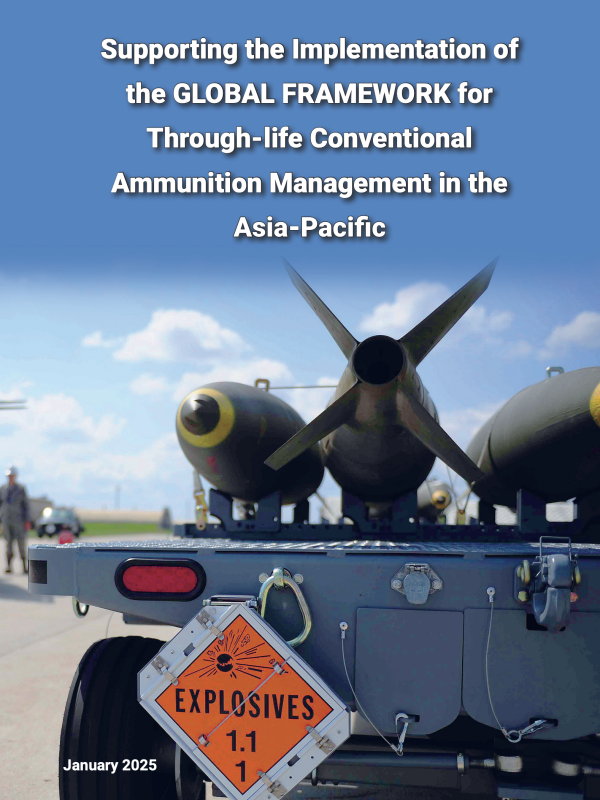
This briefing paper provides an overview of the Global Framework for Through-life Conventional Ammunition Management (GFA) and explores its relevance and implications for the Asia-Pacific region. Building upon discussions held during the Informal Regional Meeting in support of the GFA—organized by UNRCPD on 4–5 December 2024 in Kathmandu, Nepal—and based on desk research and a series of consultations, the paper identifies regional opportunities and challenges for GFA implementation. The paper begins with a brief history of the process leading to the elaboration and adoption of the GFA.